
At the beginning, GLP-1s make hunger feel quiet.
You eat less without thinking about it. Food finally feels easy.
Then one day… hunger shows up again.
Not subtle. Real hunger.
Most people immediately think, “Oh no… I’m going backwards.”
You’re not.
Nothing is broken. You’re not failing.
This is just your body adjusting — and you need a plan, not self-blame.

Why hunger comes back
This is normal. It happens to a lot of people.
Your body adapts to the medication over time. What felt strong early on may feel lighter later.
You may also be eating less than your body needs, especially as you lose weight. That can make hunger show up stronger.
Sleep, stress, and routine matter too. A few rough nights, more stress, or skipping meals can all make hunger louder.
And sometimes your digestion just speeds up a bit again. That’s normal biology.
Your body isn’t working against you.
It’s trying to keep things steady.

What this phase feels like
When hunger comes back, it’s not just physical.
You might feel:
- worried about gaining weight
- frustrated
- like you’re losing control
- pulled back toward old habits
That’s the part that trips people up.
They don’t overeat because they’re hungry.
They overeat because they panic.

What to do instead
Keep this simple.
Start by getting back to the basics.
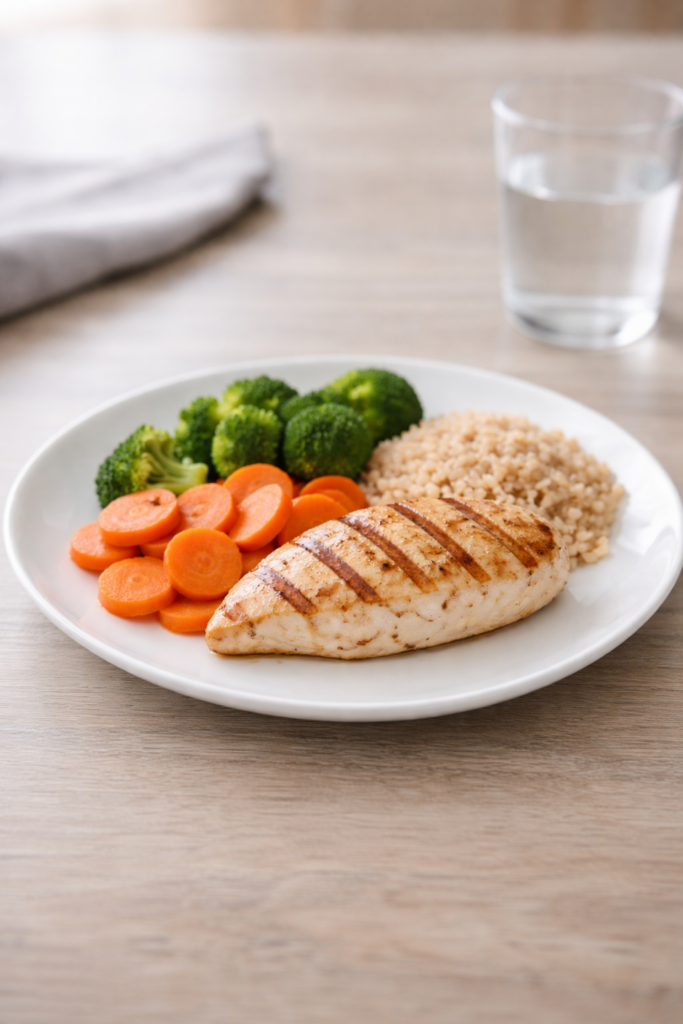
Eat some protein each time you eat. It helps you stay full and protects your muscle.
Add a little fiber during the day — vegetables, fruit, beans, oats. You don’t need a lot. Just be consistent.
Stick to a basic eating rhythm. Skipping meals often makes hunger worse later. A simple breakfast, lunch, and dinner goes a long way.
Take a look at your sleep. Even one or two bad nights can make hunger feel stronger.
Pay attention to stress. When stress goes up, hunger often follows. A short walk or just stepping outside for a few minutes can help more than you think.
And watch your thinking.
If your mind says, “I’m losing control,” your actions will follow that.
Instead, try:
“My body is adjusting. I can handle this.”
That one shift matters.
If hunger stays high
Sometimes you do need to adjust the medication.
That might mean changing the dose, staying longer at your current level, or just talking things through with your doctor.
That’s not a failure. It’s part of the process.
The bigger picture
This phase is actually important.
Early on, the medication does a lot of the work.
Now you’re building the habits that protect your results long term — with or without the medication.
That’s where real progress happens.
One last thing
You’re not going backwards.
You’re learning how to work with your body instead of fighting it.
Hunger coming back is normal.
Handling it calmly is the skill.
And that’s what makes this sustainable.
Blog

Mike Thomas is a registered pharmacist and a Mayo Clinic–trained, board-certified health coach who specializes in helping people on GLP-1 medications protect their health, preserve muscle, and build sustainable habits for lasting results—during and after treatment.
This blog is for educational and informational purposes only and solely as a self-help tool for your own use. I am not providing medical, psychological, or nutrition therapy advice. You should not use this information to diagnose or treat any health problems or illnesses without consulting your own medical practitioner. Always seek the advice of your own medical practitioner and/or mental health provider about your specific health situation. For my full Disclaimer, please go to CoachMikeThomas.com.