

The Medicare GLP-1 Bridge is a temporary program that may help some people with Medicare Part D get certain GLP-1 medications for weight management.
The good news is that this program may make these medications easier to access and much less expensive for people who qualify.
What Is the Medicare GLP-1 Bridge?
The Medicare GLP-1 Bridge started on July 1, 2026, and is expected to continue through December 31, 2027.
People who qualify may be able to receive certain GLP-1 weight-management medications for a $50 copay for a one-month supply.
The Bridge program works separately from your regular Medicare Part D drug coverage. This means:
- Your regular Part D deductible does not apply to the prescription.
- The $50 copay does not count toward your Part D out-of-pocket total.
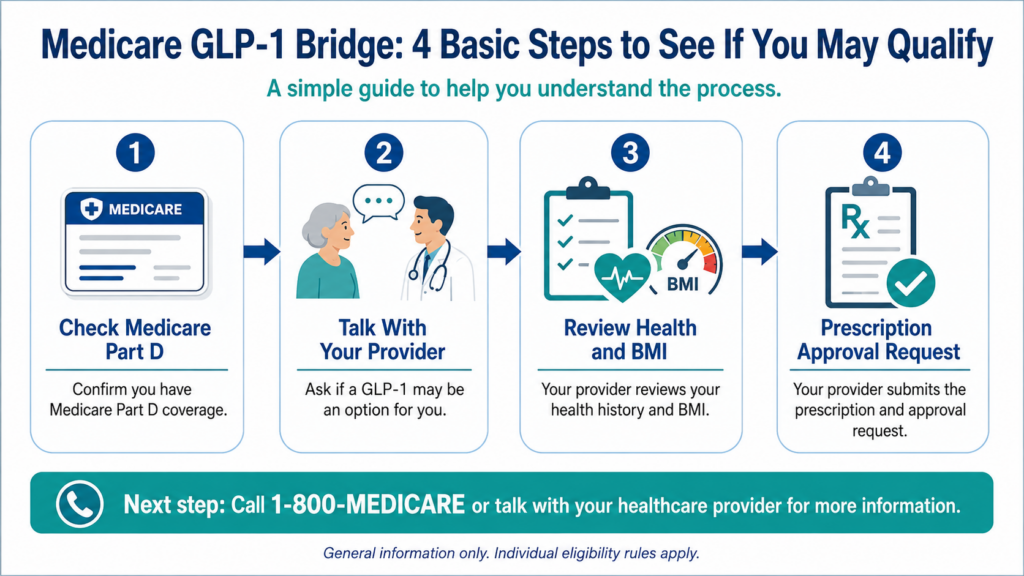
- Your healthcare provider must send in a prescription and request approval.
Having Medicare does not automatically mean you qualify. You must meet the program’s medical and coverage requirements.
Why Is This Good News?

Medicare has generally not covered GLP-1 medications when they are prescribed only for weight loss. Because of this, many people have had to pay a high cash price or go without the medication.
The Medicare GLP-1 Bridge gives some Medicare members another possible way to get treatment.
For someone who qualifies, paying $50 per month may be much more manageable than paying hundreds of dollars out of pocket.
A GLP-1 medication is not right for everyone. Still, this program may remove one of the biggest roadblocks for many people: the cost.
Could You Qualify?
You may qualify if:
- You have an eligible Medicare Part D prescription drug plan.
- Your healthcare provider prescribes the medication for weight loss or long-term weight management.
- You are also working on healthy eating, physical activity and other healthy habits.
- You meet Medicare’s medical requirements.
- Your regular Part D plan is not already covering a GLP-1 medication for your condition.
Medicare’s current medical guidelines may include one of the following:
- A body mass index, or BMI, of 35 or higher.
- A BMI of 30 or higher, along with certain health conditions, such as hard-to-control high blood pressure, some types of heart failure or chronic kidney disease.
- A BMI of 27 or higher, along with certain conditions, such as prediabetes, a previous heart attack, a previous stroke or peripheral artery disease that causes symptoms.
Your healthcare provider will need to review your health history and decide if you meet the program’s requirements.
Who May Not Qualify?
You may not qualify for the Medicare GLP-1 Bridge if your medication should already be covered through your regular Medicare Part D plan for another medical condition.
Examples may include:
- Type 2 diabetes.
- Moderate-to-severe obstructive sleep apnea.
- Certain serious liver conditions.
- Using Wegovy to lower heart-related risks when you already have cardiovascular disease.
- Already receiving a GLP-1 medication through Medicare Part D.
In these situations, your healthcare provider may need to request coverage directly from your regular Part D plan instead of using the Bridge program.
Watch This Helpful Video About the Medicare GLP-1 Bridge
The video below explains the Medicare GLP-1 Bridge in simple language.
Topics discussed include:
- What the program is.
- Who may qualify.
- How the $50 monthly copay works.
- Who may need to use regular Medicare Part D coverage instead.
- What steps you can take next.
Watch the video here:
What Should You Do Next?

Start by talking with the healthcare provider who manages your weight, medications or other health conditions.
You may want to ask:
- Is a GLP-1 medication a reasonable option for me?
- Do I meet the Medicare GLP-1 Bridge requirements?
- Should my medication be covered through the Bridge or through my regular Part D plan?
- Can your office submit the required approval request?
You can also call 1-800-MEDICARE (1-800-633-4227) or visit Medicare’s official Medicare GLP-1 Bridge webpage for more information.
The Bottom Line
The Medicare GLP-1 Bridge will not help every person with Medicare, but it is a positive step toward making GLP-1 medications easier to access.
For people who qualify, the program may provide certain GLP-1 medications for a $50 monthly copay instead of requiring them to pay a much higher cash price.
Do not assume that you qualify—or that you do not qualify—based on one diagnosis. Talk with your healthcare provider and contact Medicare. They can help you understand your options and take the next step.
This article provides general information and does not replace advice from your healthcare provider, pharmacist or Medicare representative.

Mike Thomas is a registered pharmacist and a Mayo Clinic–trained, board-certified health coach who specializes in helping people on GLP-1 medications protect their health, preserve muscle, and build sustainable habits for lasting results—during and after treatment.
This blog is for educational and informational purposes only and solely as a self-help tool for your own use. I am not providing medical, psychological, or nutrition therapy advice. You should not use this information to diagnose or treat any health problems or illnesses without consulting your own medical practitioner. Always seek the advice of your own medical practitioner and/or mental health provider about your specific health situation. For my full Disclaimer, please go to CoachMikeThomas.com.