
If you take a GLP-1-based medication such as Ozempic, Wegovy, Mounjaro, or Zepbound, you may have heard that the medication can “reset your set point.”
The idea sounds encouraging. The medication changes the weight your body naturally tries to maintain, making it easier to keep the weight off permanently.
But here’s the honest answer: We do not currently have strong evidence showing that GLP-1 medications permanently reset your body’s set point after you stop taking them.
What Is a Set Point?
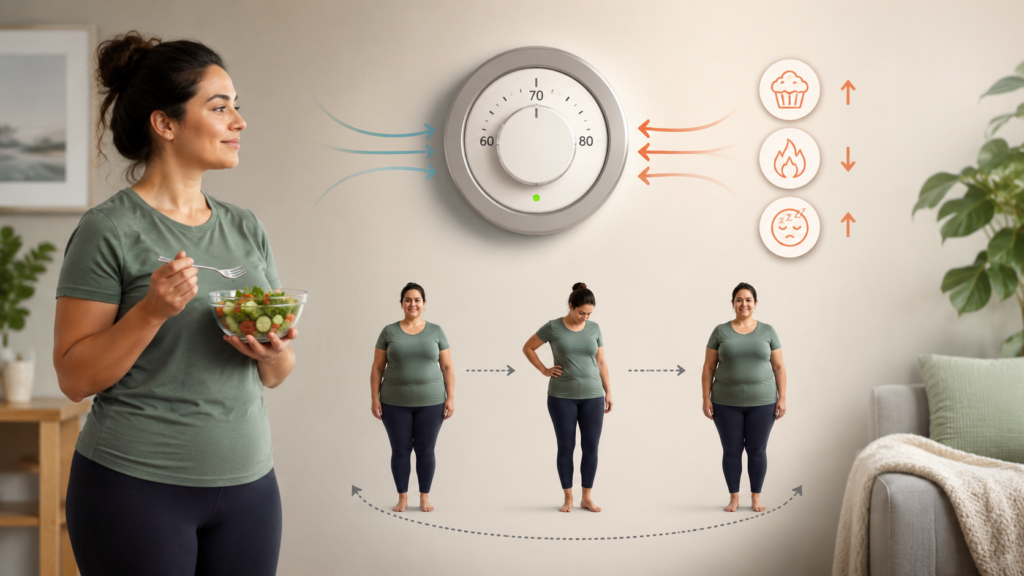
Think of your body like a thermostat.
When your home is set at 72 degrees and the temperature drops, the heat turns on to bring the temperature back up. Your body may respond in a similar way when you lose weight.
As your weight drops, your body may:
- Increase your hunger
- Make you think about food more often
- Reduce the number of calories you burn
- Push you toward your previous weight
These responses are part of your body’s effort to protect you. Unfortunately, they can also make long-term weight loss difficult.
What Do GLP-1 Medications Actually Do?

GLP-1-based medications can help you feel satisfied with less food. They may also slow digestion and affect areas of the brain involved in appetite and cravings.
Many people describe a major reduction in “food noise.”
Food may no longer dominate your thoughts. You may stop thinking about your next meal or snack all day. Eating smaller portions can begin to feel much easier and more natural.
Because of these changes, it may feel as though your body’s set point has moved lower.
But that does not necessarily mean the change will remain after the medication is stopped.
What Can Happen When You Stop?
This is where things can become challenging.
Studies involving semaglutide and tirzepatide found that many participants regained a significant amount of weight after the medication was withdrawn.
Appetite, cravings, and food noise may also return.
This does not mean you failed. It does not mean you lack discipline or willpower.
It means the medication was helping manage biological signals related to hunger and weight. When the medication is removed, those signals may become stronger again.
A Quick Story

One of my clients—let’s call her Jenny—started taking a GLP-1 medication and was amazed by how quiet her food cravings became.
For the first time in years, she was not constantly thinking about her next snack. She felt more in control and could make healthier choices without feeling as though she was fighting herself all day.
Later, she had to pause the medication. Over time, she noticed her cravings slowly returning. She began thinking about food more often, and some of her previous habits started creeping back.
Her body’s “thermostat” appeared to be pushing her toward her old patterns.
That is why I encourage people to use the quieter period on a GLP-1 medication to practice habits that support their health.
This may include:
- Strength training to protect muscle
- Prioritizing protein
- Walking and adding movement throughout the day
- Eating balanced meals
- Planning for stressful or busy days
- Learning how to respond when hunger and cravings increase
You do not need to do everything perfectly. Start with a few small actions you can repeat.
The Bottom Line
GLP-1-based medications can be powerful tools. They can turn down the volume on hunger, cravings, and food noise, making it easier to lose weight and make healthier choices.
But we do not currently have strong evidence that these medications permanently reset your body’s set point after you stop taking them.
Think of the medication as one part of your long-term health plan—not the entire plan.
Use the quieter time around food to build strength, protect your muscle, improve your eating patterns, and create routines you can continue.
You may still need ongoing medical treatment or added support. Never stop or change your medication without talking with your healthcare provider.
The goal is not perfection. The goal is to use the support you have today to become stronger and better prepared for tomorrow.

Mike Thomas is a registered pharmacist and a Mayo Clinic–trained, board-certified health coach who specializes in helping people on GLP-1 medications protect their health, preserve muscle, and build sustainable habits for lasting results—during and after treatment.
This blog is for educational and informational purposes only and solely as a self-help tool for your own use. I am not providing medical, psychological, or nutrition therapy advice. You should not use this information to diagnose or treat any health problems or illnesses without consulting your own medical practitioner. Always seek the advice of your own medical practitioner and/or mental health provider about your specific health situation. For my full Disclaimer, please go to CoachMikeThomas.com.