
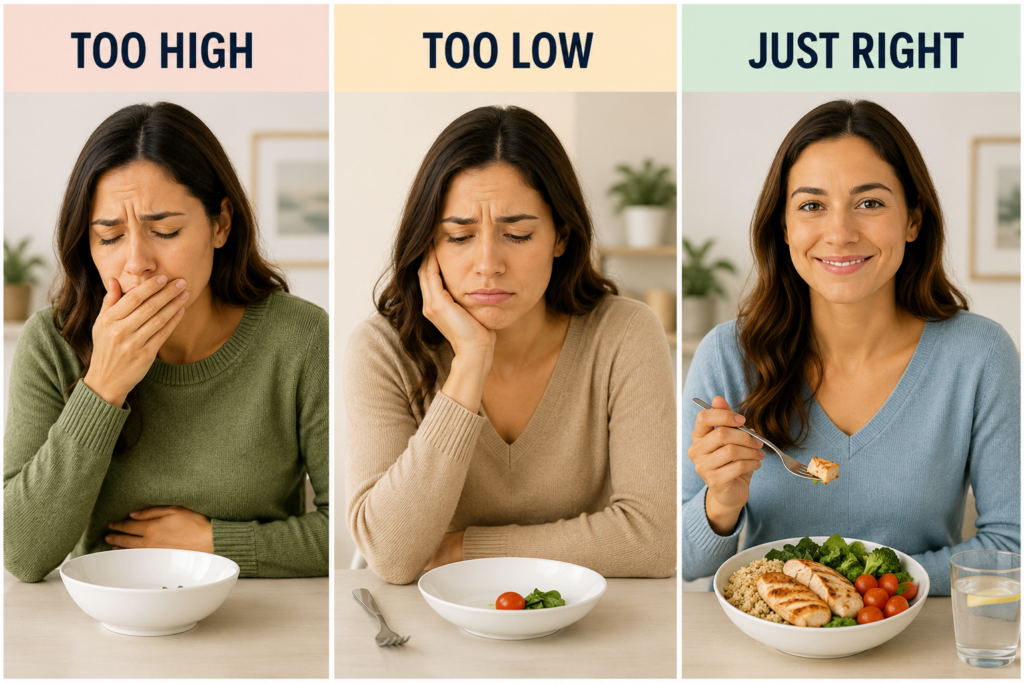
Let’s be honest. Finding the right GLP-1 dose can feel a little like Goldilocks.

Too low… you’re hungry.
Too high… your stomach feels like it forgot how to be a stomach.
Just right… that’s what we’re trying to find.
If you’ve ever wondered, “Is this dose actually right for me?” you’re definitely not alone.
The good news is that your body usually gives you some pretty good clues. You just need to know what to watch for.
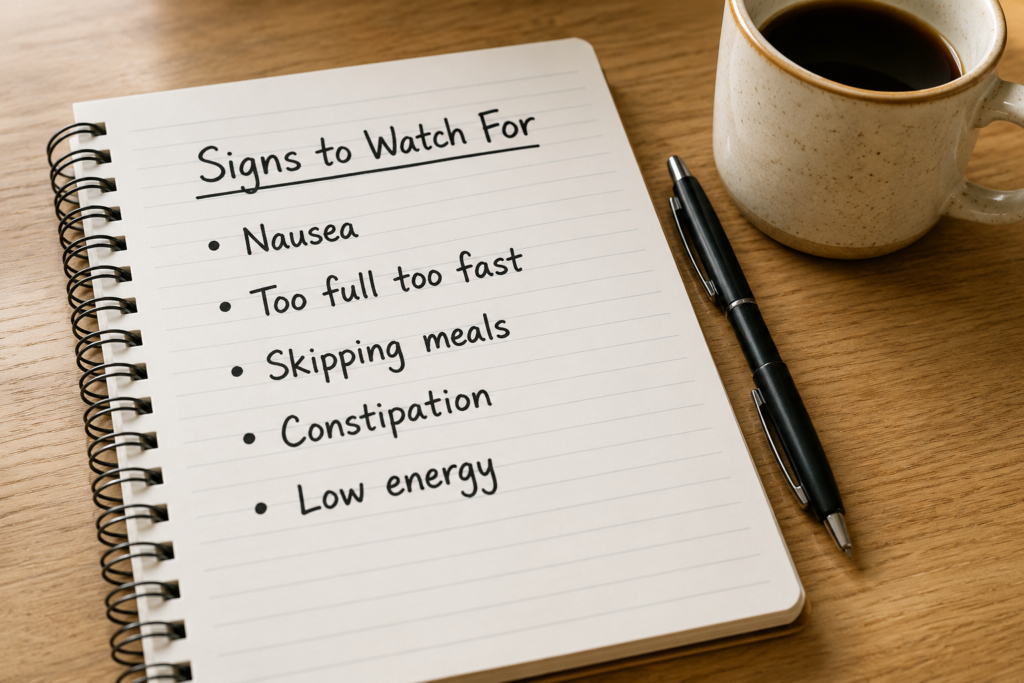
Signs your dose might be too high
- You feel full after just a few bites.
Eating less is the goal, but if three bites of yogurt make you feel like you just finished Thanksgiving dinner, your dose may be higher than you need. - You’re skipping meals because you simply don’t want to eat.
Going most of the day without eating makes it hard to get enough protein, vitamins, and calories. Your muscles won’t be very happy about that. - Nausea has become a regular visitor.
Mild nausea can happen, especially when starting or increasing your dose. But if you feel sick every day or food has become unappealing, it’s worth talking with your healthcare provider. - Constipation has become a constant problem.
GLP-1 medications naturally slow digestion, but if things have slowed to a crawl, your dose could be more than your body is comfortable with. - You feel tired most of the time.
Sometimes the problem isn’t the medication itself—it’s that you’re not eating enough to fuel your body. GLP-1s should help you feel better, not drain your energy.
Signs your dose might be too low
- You’re still hungry all the time.
If your appetite hasn’t settled down and you’re constantly thinking about your next meal, your dose may not be giving you enough benefit yet. - You regularly overeat.
These medications should make it easier to recognize when you’ve had enough. If you’re still eating well past fullness, your dose may need to be adjusted. - Food noise is still running the show.
If food is still on your mind all day long, you may not be getting the full effect of the medication.
Signs your dose may be just right
- You feel satisfied—not stuffed.
You naturally eat a little less, stop when you’re comfortably full, and move on with your day. - You still enjoy eating.
Food shouldn’t become something you avoid. You should still enjoy meals—you’ll probably just need less food to feel satisfied. - Your energy stays steady.
You have enough energy to work, exercise, and enjoy life without constantly feeling wiped out. - You can eat a balanced meal.
You have enough appetite to get in your protein and other healthy foods, but not so much that you feel out of control.

If something feels off…
Remember, you’re not stuck.
Talk with your healthcare provider. Depending on your situation, they may recommend:
- Staying at your current dose a little longer
- Lowering your dose
- Skipping a week if appropriate
- Changing when you take your injection
The more specific you can be, the more helpful it is. For example:
- “I’m so full I can’t eat enough protein.”
- “The nausea seems to be getting worse.”
- “I’m still hungry all the time.”
That kind of feedback helps your provider make better decisions.
The bottom line
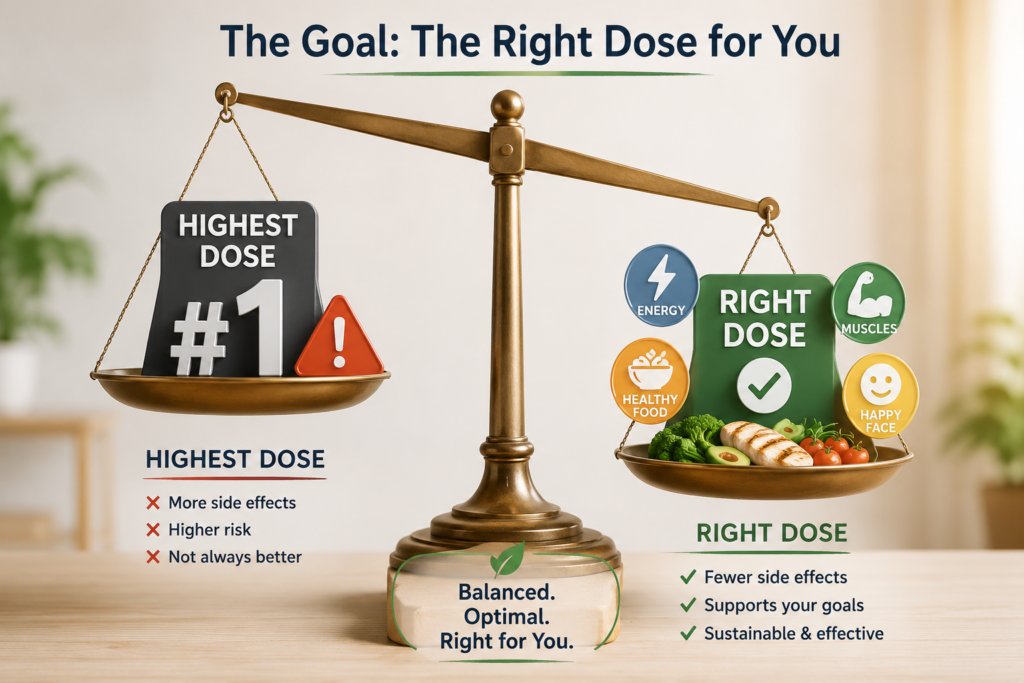
The goal isn’t to be on the highest dose.
The goal is to be on the right dose—the one that helps you lose weight while still eating enough protein, protecting your muscle, feeling good, and building habits you can stick with.
Think of it like tuning a guitar. Small adjustments can make a big difference.
Listen to your body.
Pay attention to the signals.
And don’t be afraid to ask questions. Finding the right dose is part of the process.

Mike Thomas is a registered pharmacist and a Mayo Clinic–trained, board-certified health coach who specializes in helping people on GLP-1 medications protect their health, preserve muscle, and build sustainable habits for lasting results—during and after treatment.
This blog is for educational and informational purposes only and solely as a self-help tool for your own use. I am not providing medical, psychological, or nutrition therapy advice. You should not use this information to diagnose or treat any health problems or illnesses without consulting your own medical practitioner. Always seek the advice of your own medical practitioner and/or mental health provider about your specific health situation. For my full Disclaimer, please go to CoachMikeThomas.com.
Great content! Keep up the good work!